Tag: Angra Fria

  • Skeleton Coast 2025 #6: Towards and at Bosluisbaai

    Skeleton Coast 2025 #6: Towards and at Bosluisbaai

    This entry is part 6 of 8 in the series Skeleton Coast 2025

    Our itinerary included a day or two at Bosluisbaai, where fishing is supposed to be excellent. But, we had quite a bit of ground to cover before getting there.

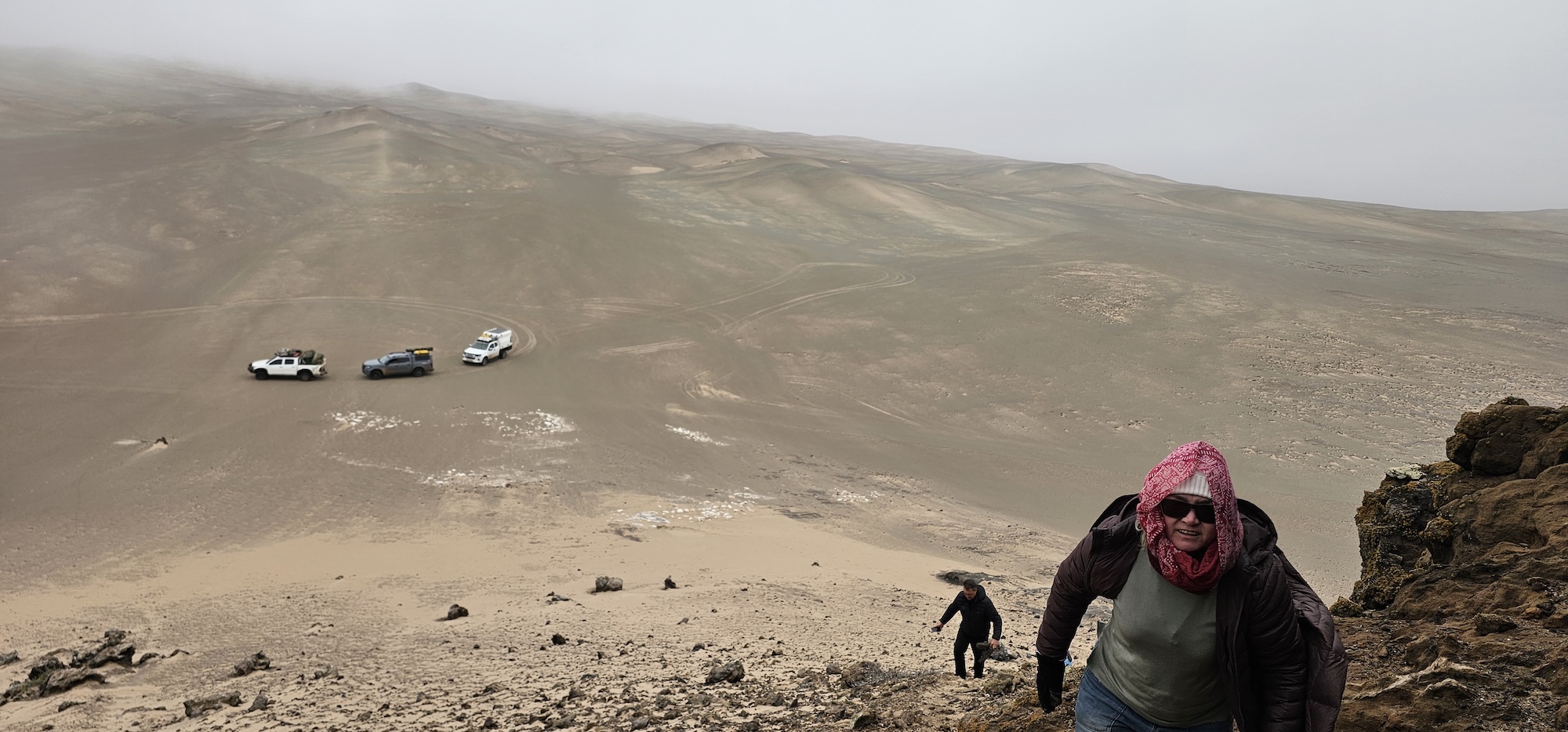
    As we were already a little bit in-land, Luciano added to our list of sights by taking us to yet another destination that seemed to be through a gateway to a different planet. I cannot remember what the koppie that we ascended was called, but it was another great example of how drastic and quickly the landscape can change in this region.

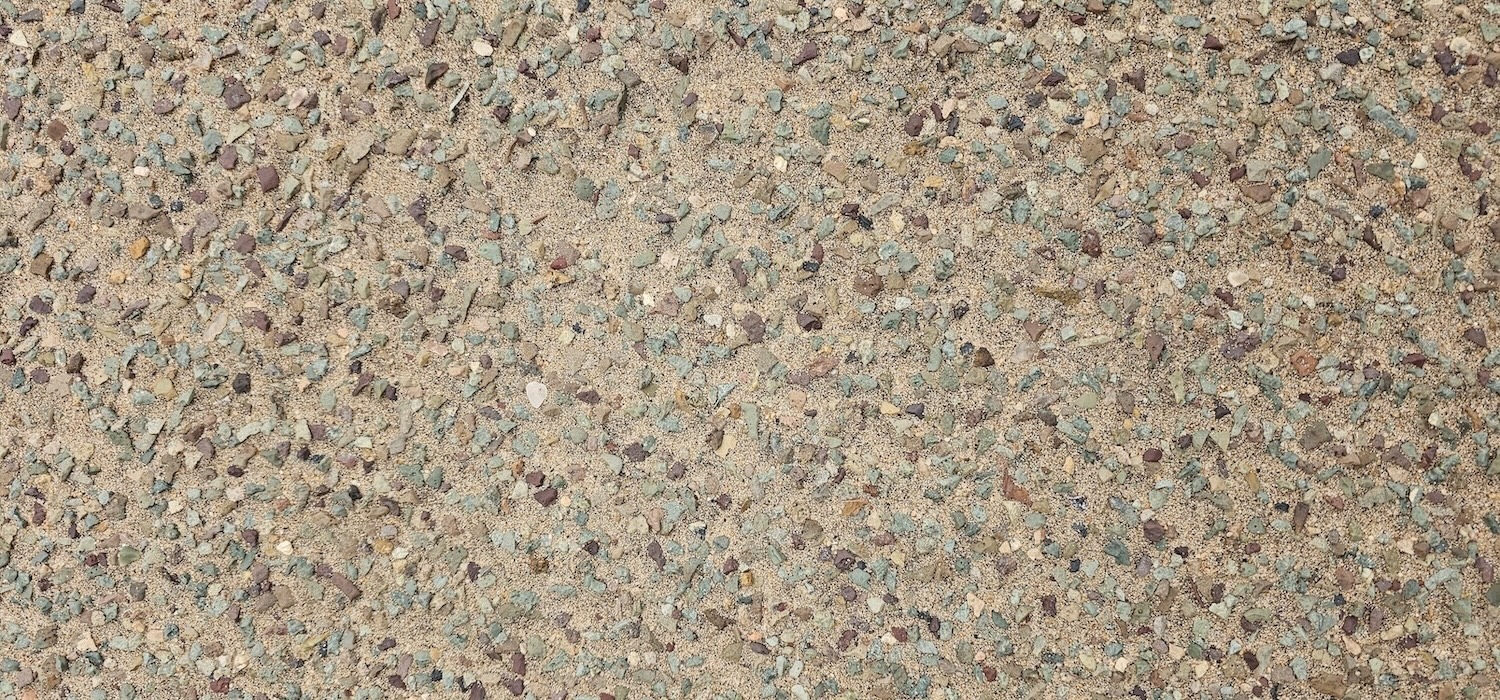
    One minute we were still driving dunes, the next the ground became hard and had a distinct green tint. The colour comes from thousands of little green stones that covers the landscape.
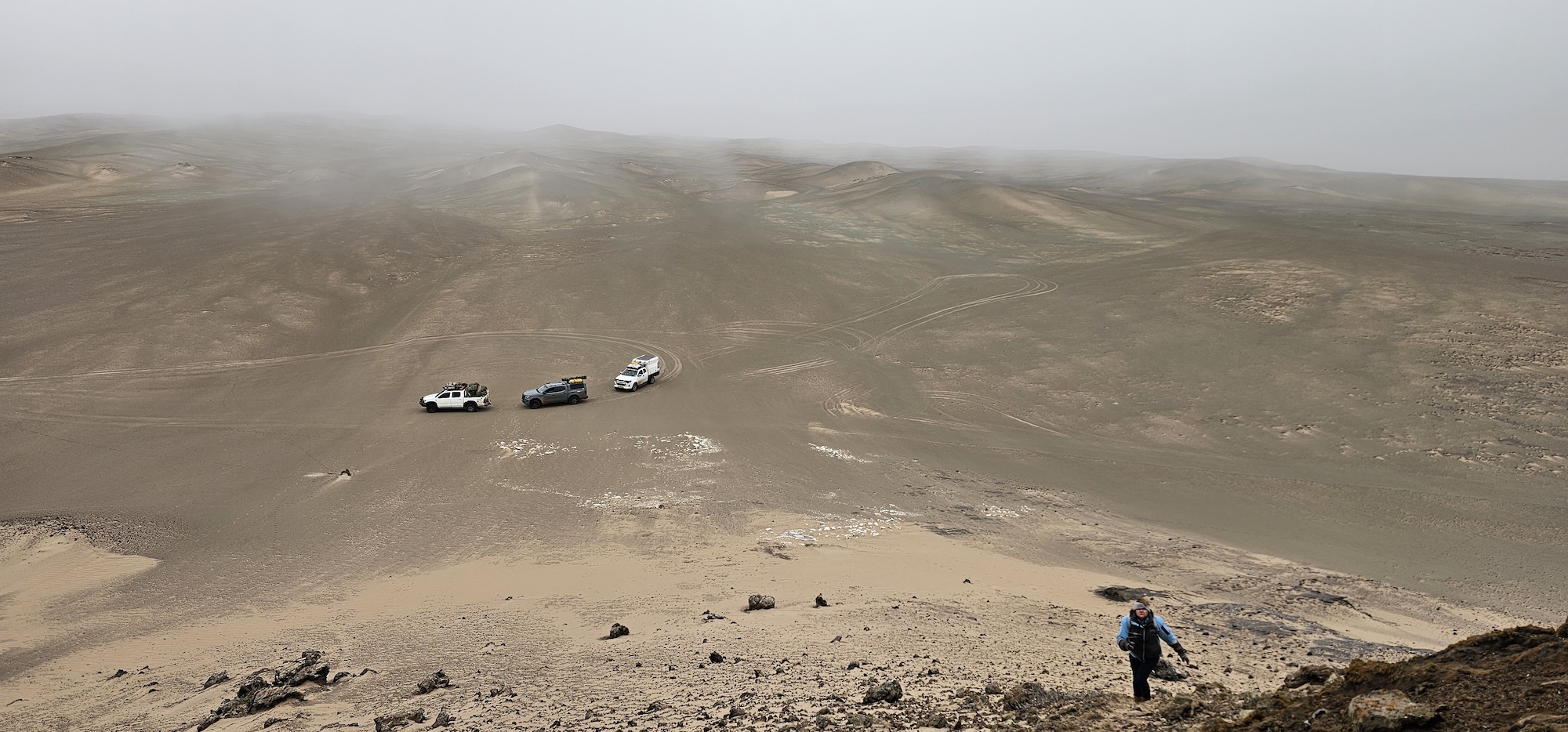
    The climb up the koppie was semi-tough, but worth it. The view from the top was spectacular, despite the misty conditions.
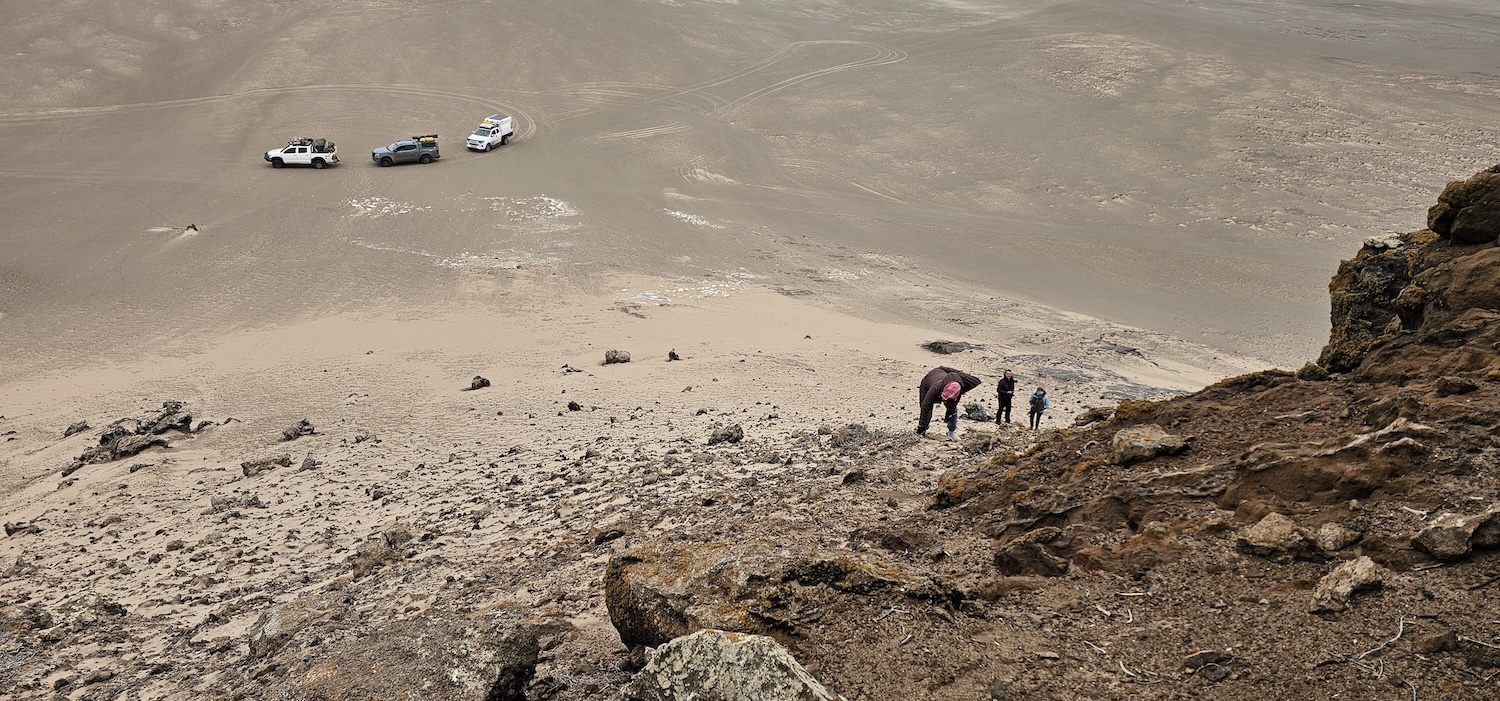
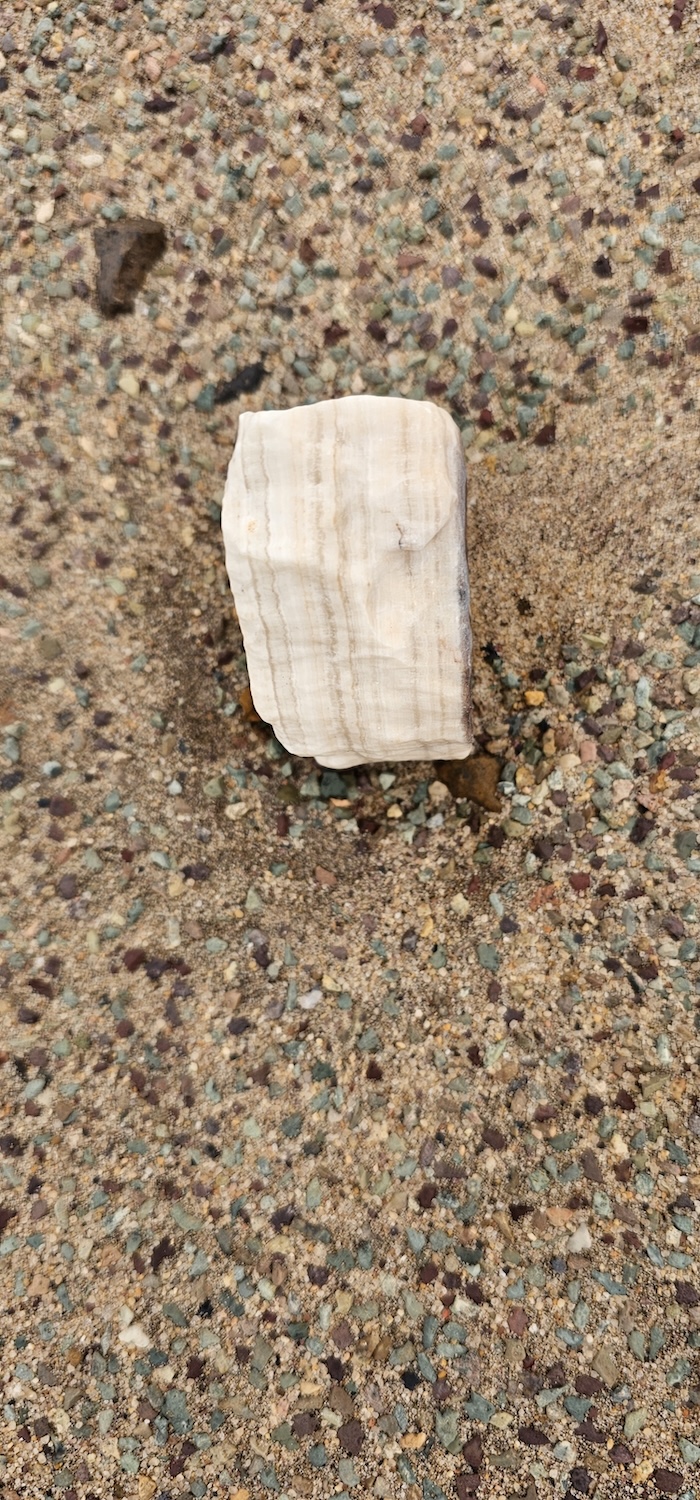
    There were agate stones everywhere, with varying patterns and translucency. Agates are well-known for their beauty and are frequently used in jewellery. The many different examples kept us exploring for quite some time.
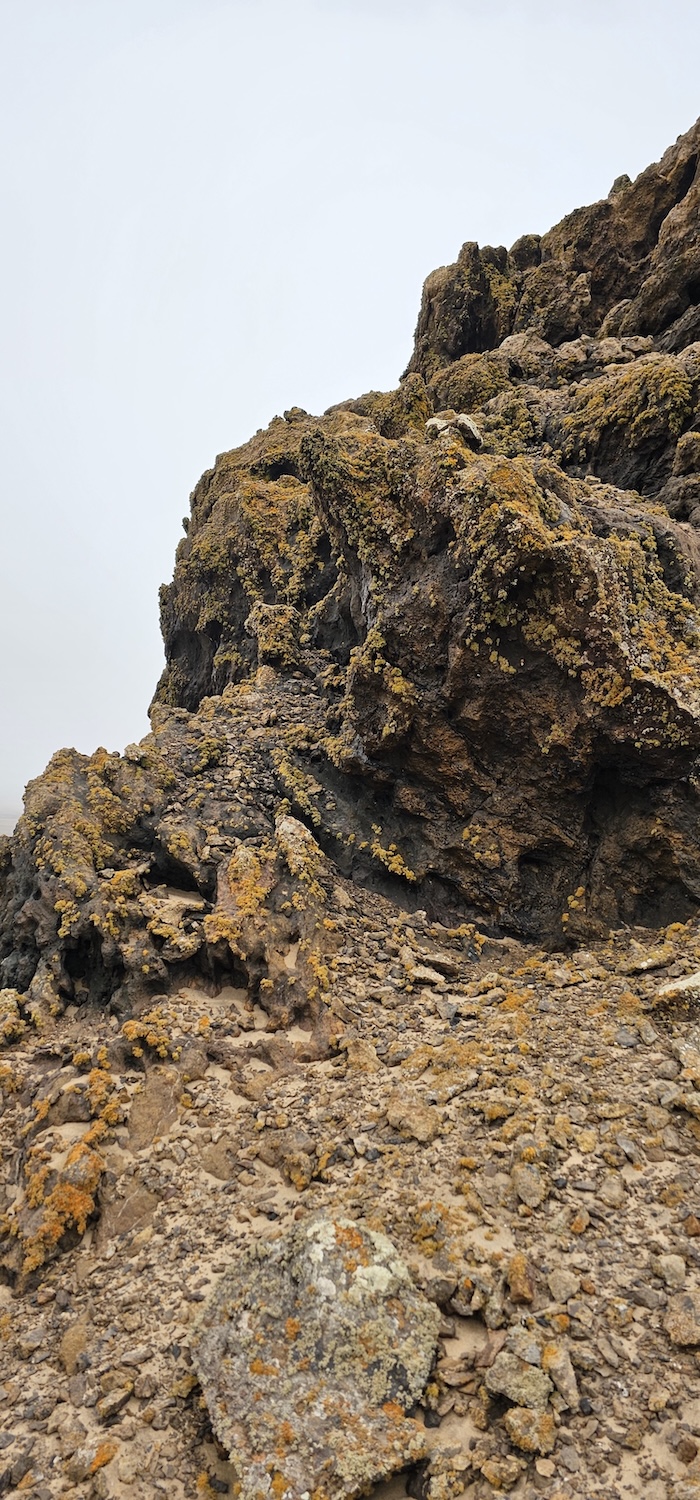
    The rocks that make up the koppie are covered by lichens. This was not the only place we saw lichens, but was probably the example with most abundance.
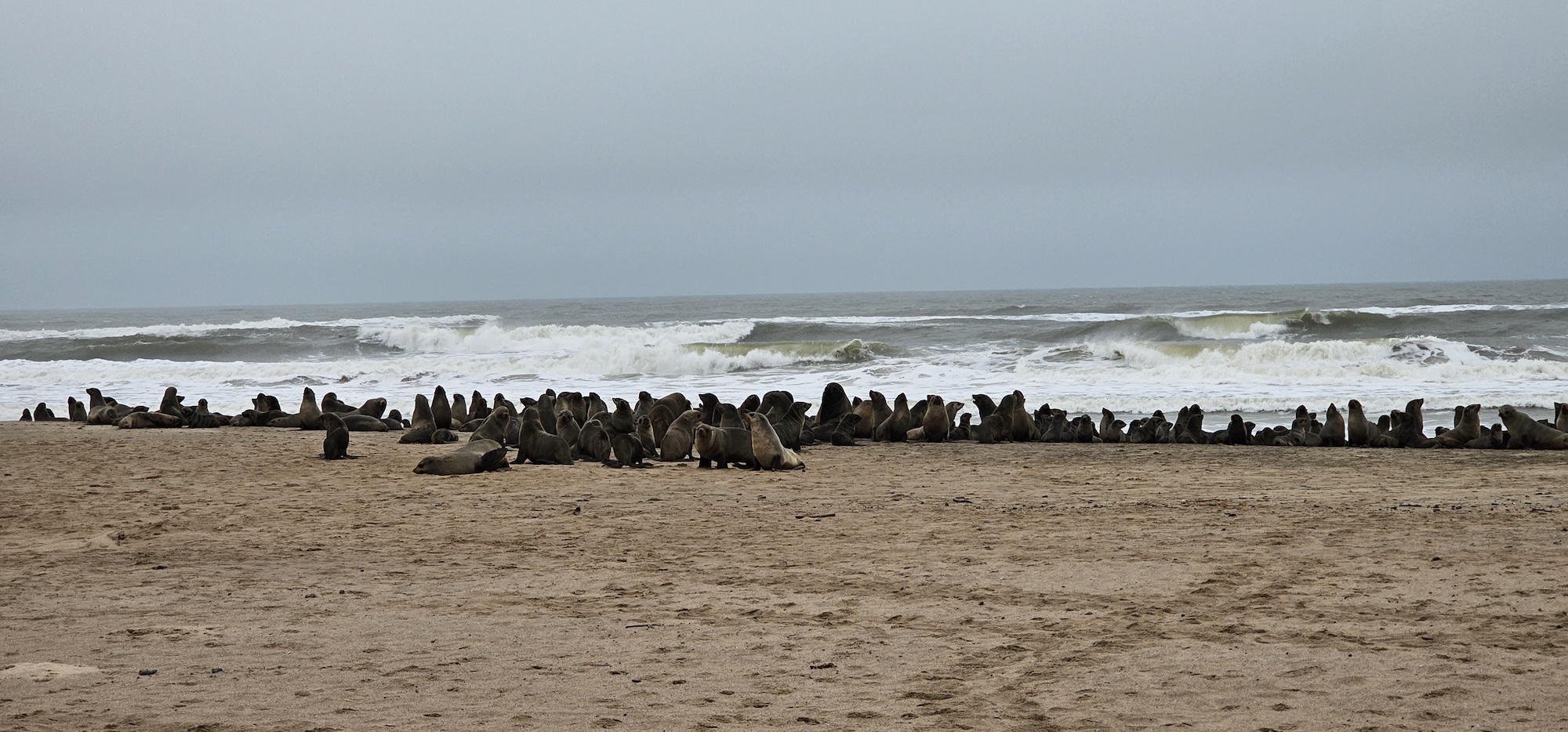
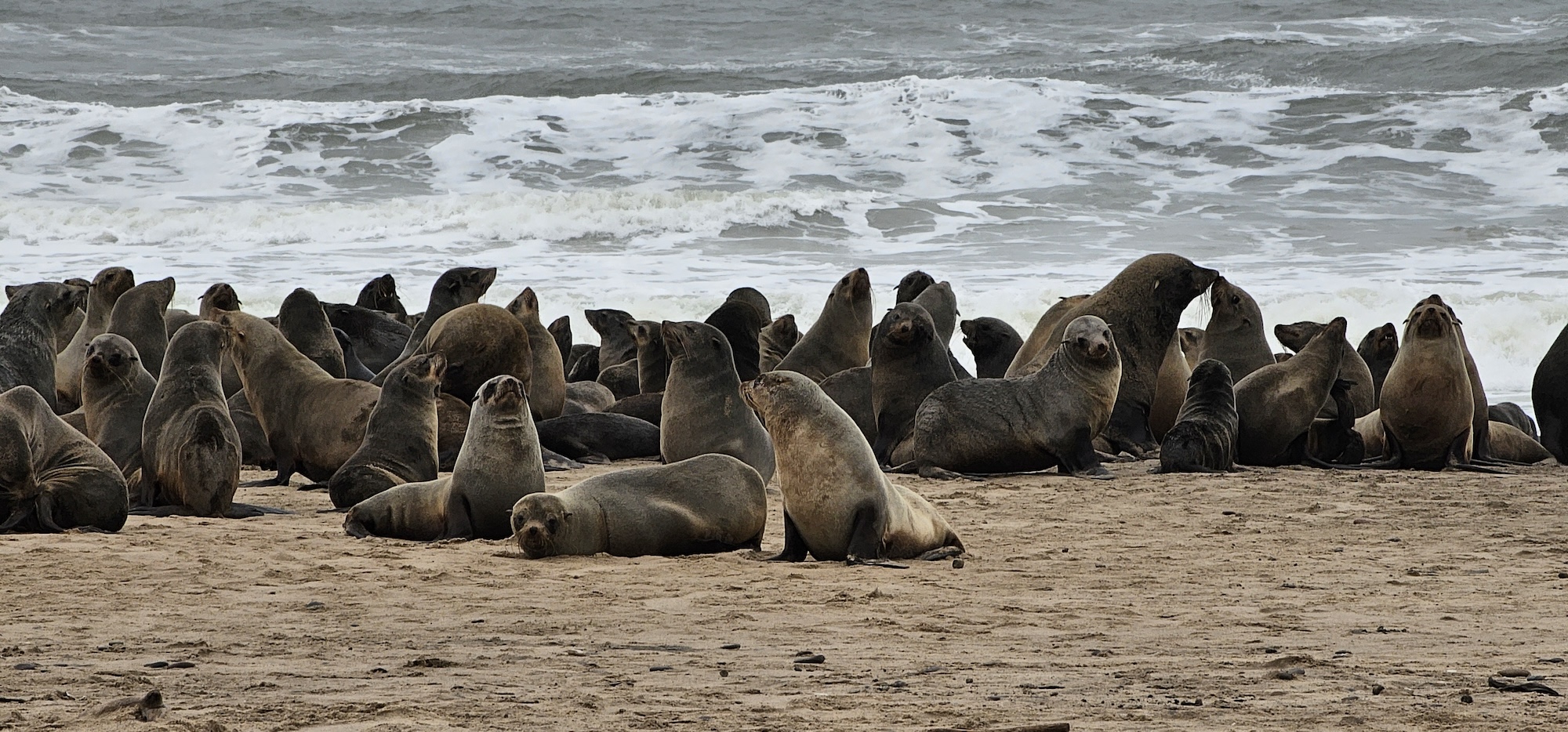
    After that, we headed back to the coast and visited the well-known seal colony at Angra Fria. As others will tell you, if your windows are open you will smell the seals long before you see them!

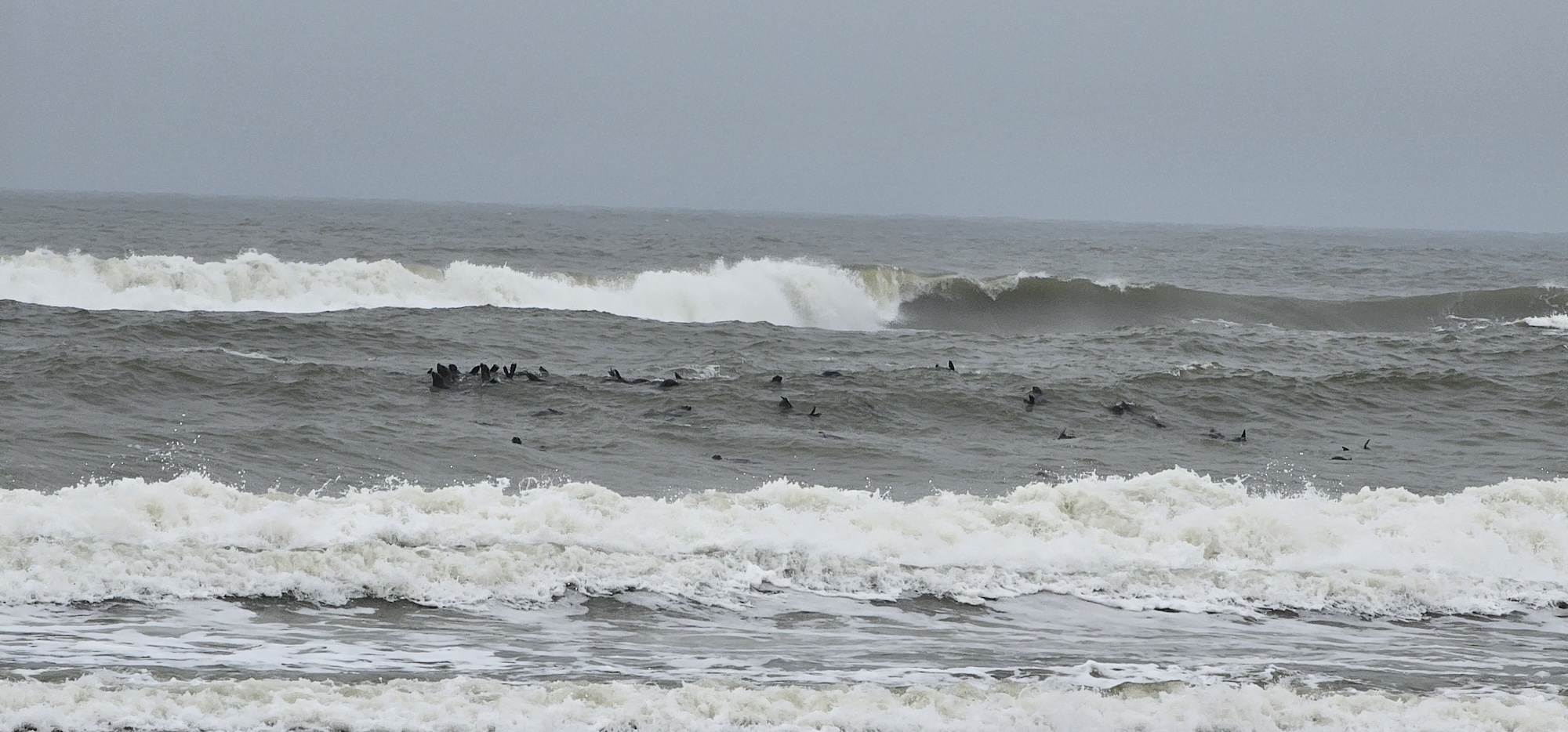
    I don’t know quite how many seals there are, but we saw three colonies with probably a good couple of hundred seals in each (how’s that for a precise answer)! Several seals were also in the water. Among the seals, jackals were scavenging and presumably looking for stray pups.

    Apparently a seal eats approximately 4-6% of it’s own body weight in fish per day. Considering that a large cape fur male weighs in around 200-300kgs, there has to be a lot of fish in this ocean.
    We were due to sleep in the wild tonight, but considering the strong wind, we opted to push through to Bosluisbaai. We could not use the camp, as a previous group was still there, but we were able to camp a bit in-land, sheltered by large dunes on two sides.
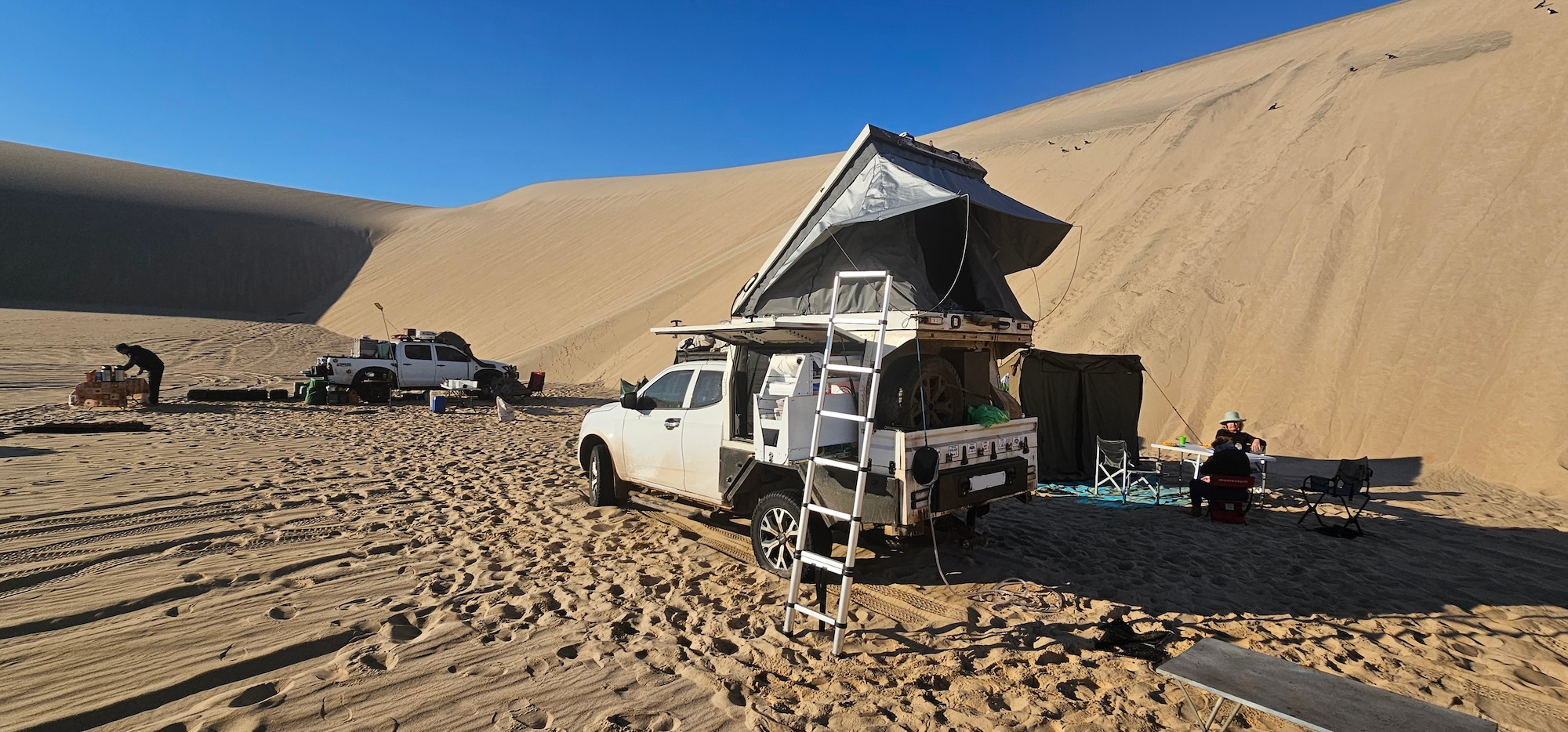
    The following day, we were able to move to the camp where we had hot showers and a kitchen at our disposal for two days. We made full use of these luxuries. The bathrooms were excellent, and I made use of the shower following a mumbled comparison to the odour of a seal, coming from my wife.

    We took the opportunity to fish for the next two days. Whilst this is not a fishing trip, the days at Bosluisbaai are pretty yours to do what you want (dune driving, fishing, or just chilling with a book). Despite relatively short stints fishing, we caught quite a few nice sized Kabeljou.
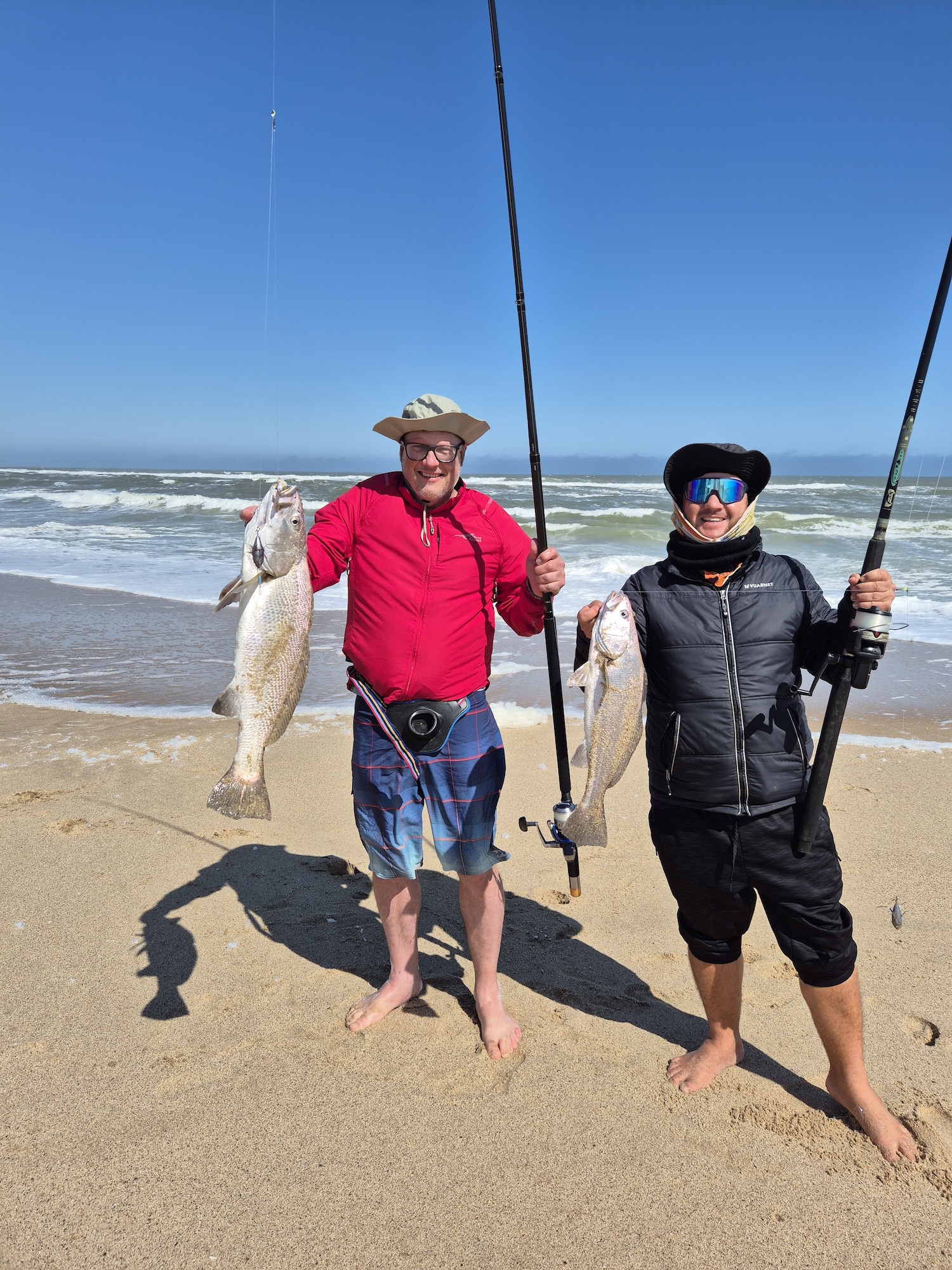
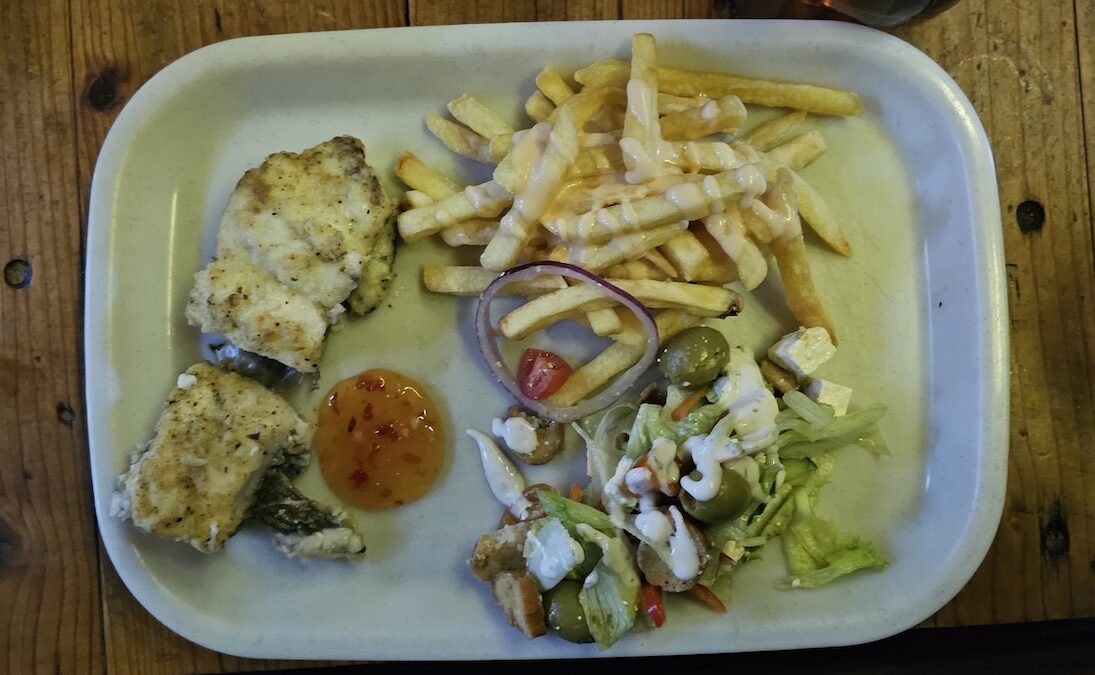
    It is strictly catch and release – but rumour has it one made it into the pan.
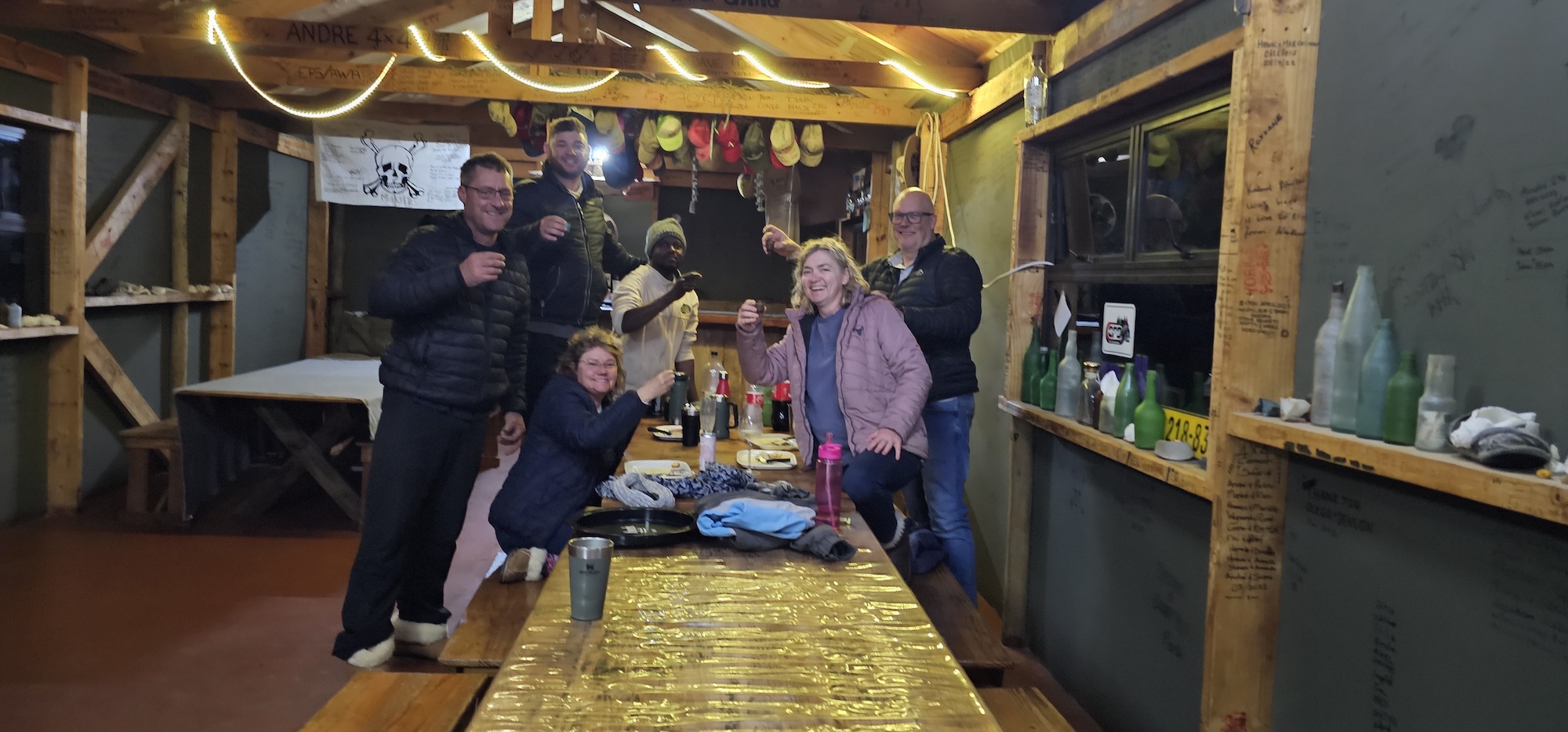
    In addition to the kitchen, there is a big open area with a bar (unstocked) where we had dinner. These turned out to be quite festive. You will never have enough drinks or enough diesel on this trip – plan carefully.
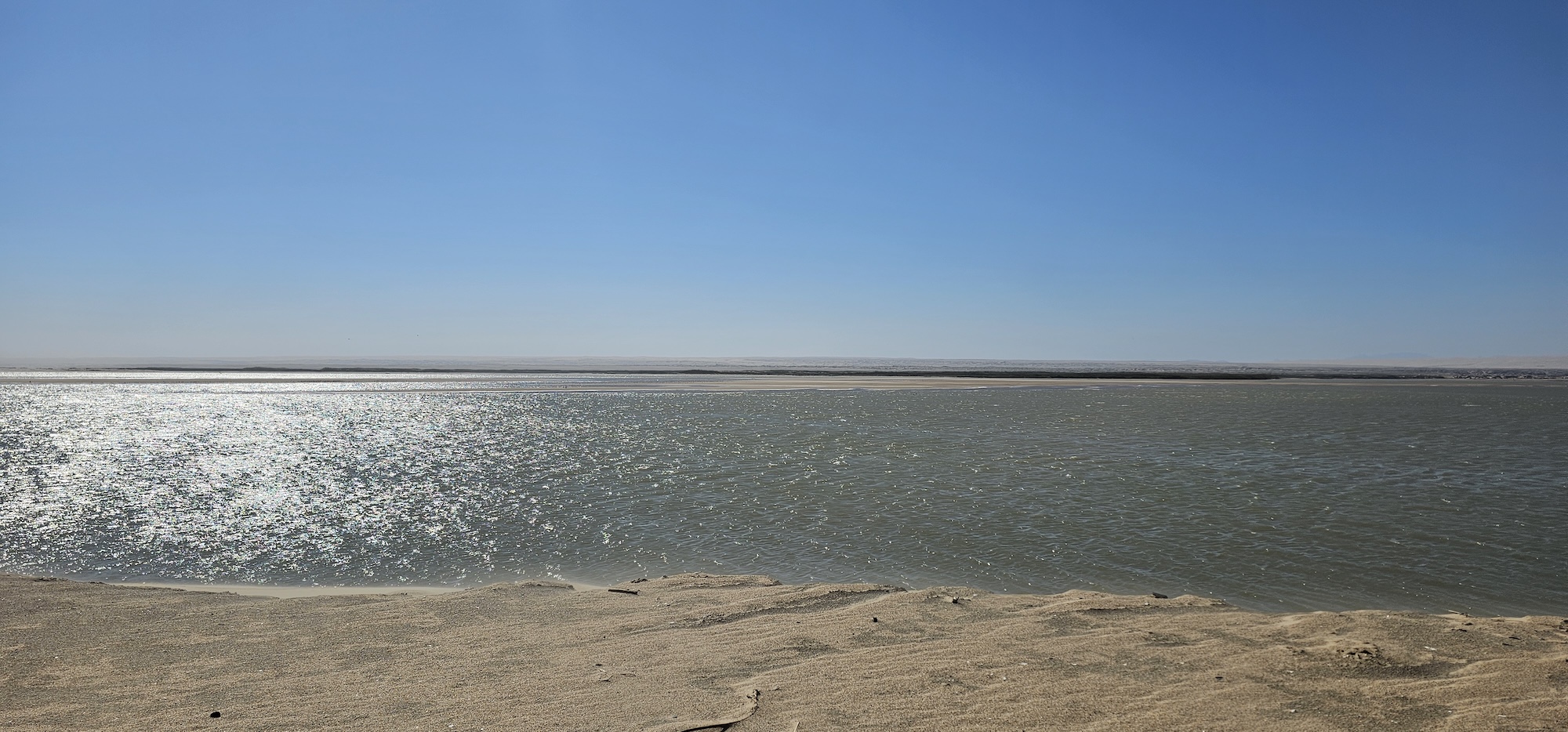
    From Bosluisbaai it is a short drive to the Kunene river mouth. The road there goes past yet another abandoned mine (diamonds, this time). The river is not massive, but certainly bigger than anything else you’ll encounter on this trip. In the distance is Angola.
    They have clean diesel at Bosluisbaai. The premium is probably around 50%, due to the difficulty of getting the diesel to the camp. If you are even remotely uncertain about your fuel, discuss it with the guide and rather fill an extra jerry-can. Once you leave Bosluisbaai, it is traversing dunes all the way into Kaokoland and your jaw will drop will as fast as the fuel-gauge.

    But let’s keep the dune crossing for the next post!

    Skeleton Coast 2025 #1: Introduction

    Skeleton Coast 2025 #2: Getting there

    Skeleton Coast 2025 #3: Swakopmund – old German charm

    Skeleton Coast 2025 #4: Through the mist to somewhere north of Terrace Bay

    Skeleton Coast 2025 #5: Up towards Angra Fria

    Skeleton Coast 2025 #6: Towards and at Bosluisbaai

    Skeleton Coast 2025 #7: Across the dune belt and into Hartmansvallei

    Skeleton Coast 2025 #8: Down to Purros and Sesfontein
  • Skeleton Coast 2025 #5: Up towards Angra Fria

    Skeleton Coast 2025 #5: Up towards Angra Fria

    This entry is part 5 of 8 in the series Skeleton Coast 2025

    Today we don’t have a lot of ground to cover, and we can take things a bit slower. Perhaps that is also the reason that a couple of my favourite photos are from today.

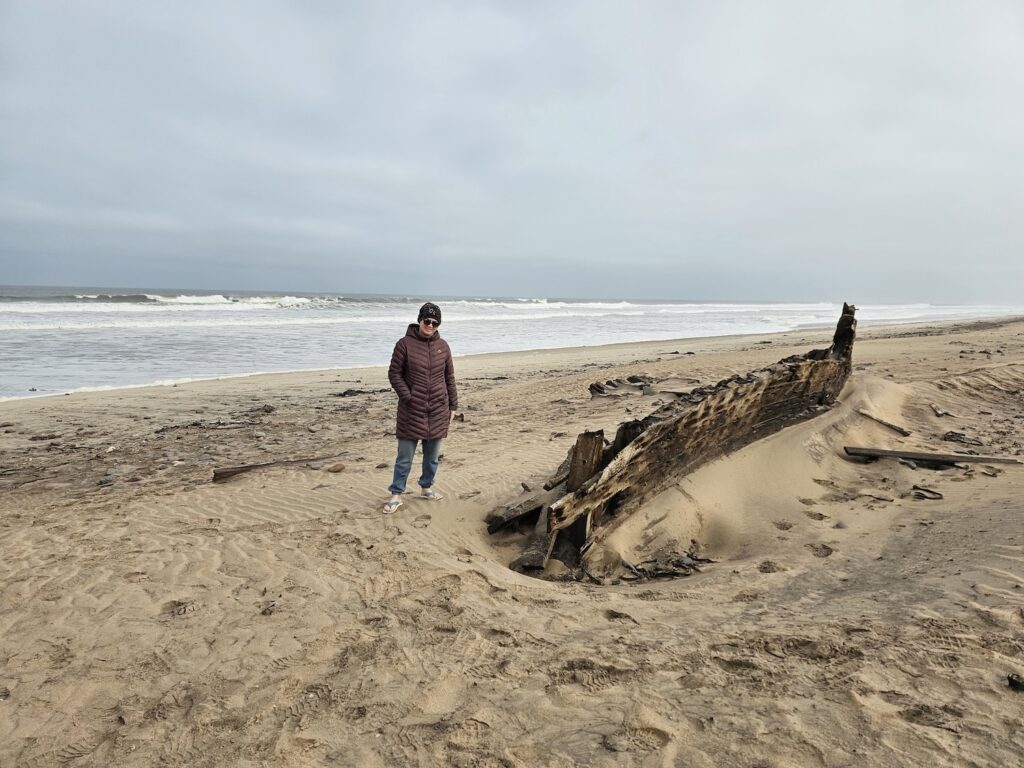
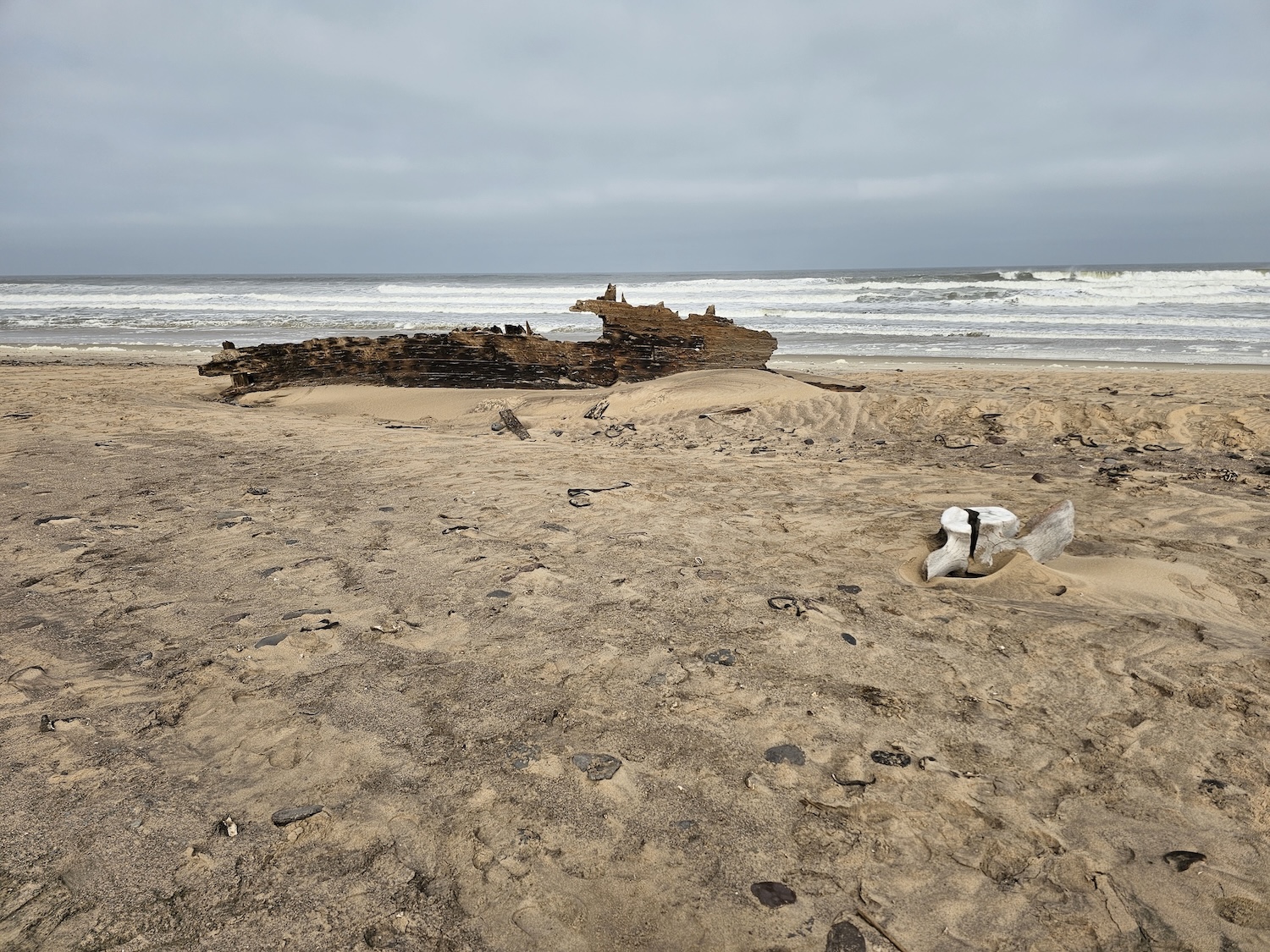
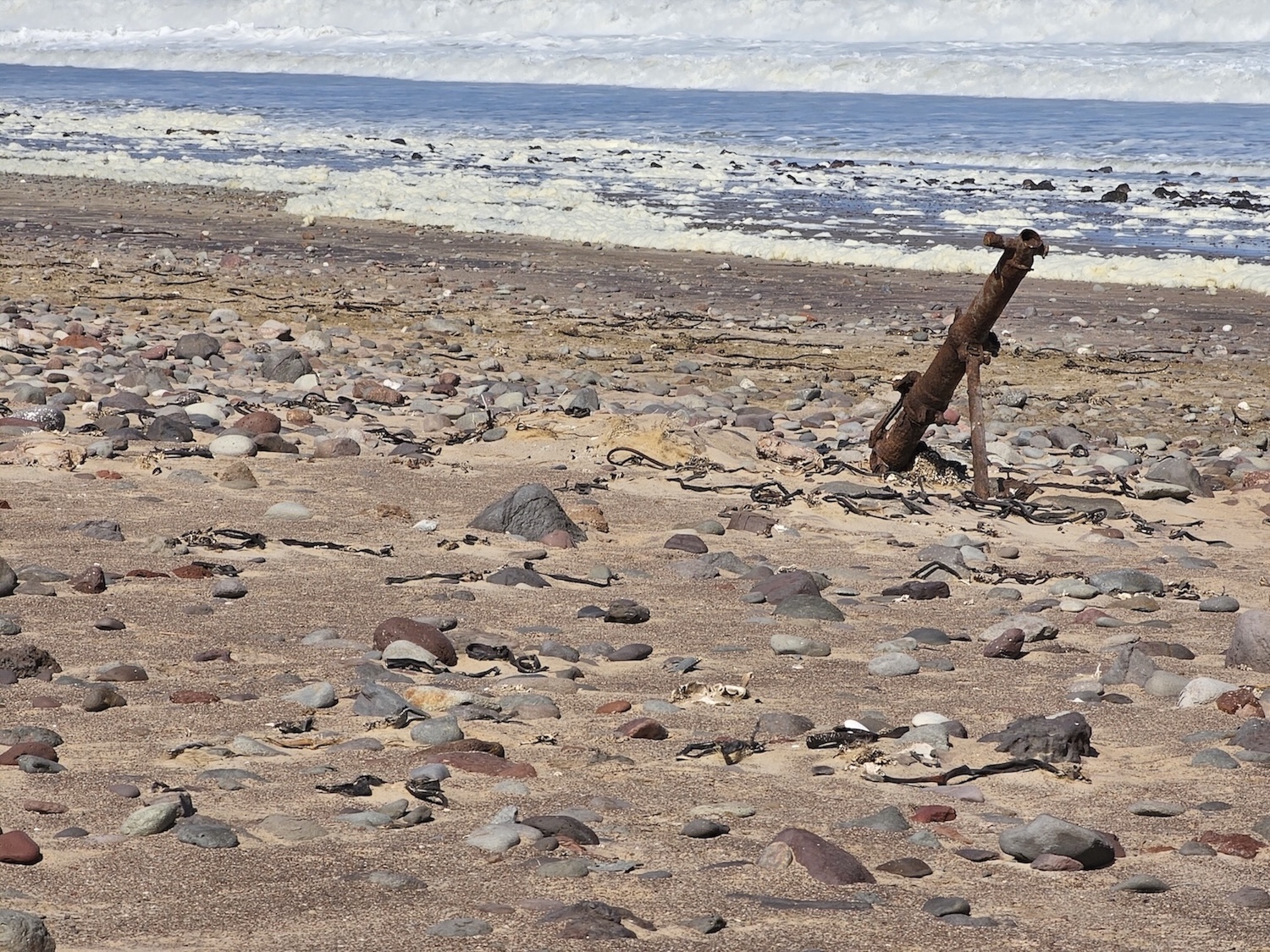
    We keep travelling northward to the Kunene mouth. Our first stop is at the humble remains of an boat. I wish I could tell you a bit more about it, but I simply cannot recall the story. Was there even a story? Yes, there definitely was. At every single spot that we stopped, our guide had a story.

    While I can not recall the story of the boat right now, Luciano shared a story on the side with me that he heard from an old guide. In the old days, he says, when ships were made of wood, very large iron nails were used in ship building. Iron was a commodity and frequently traded in stead of coins.

    Sailors, when going ashore, would often remove a nail from the ship to render payment for … ermmm … services that they received from ladies. In Afrikaans they called this ” ‘n Spyker vir ‘n spyker” which roughly translates to “a nail to get nailed”. I found this both funny and fascinating, but have no idea whether it is true or just a bit of folklore.

    No wonder the ships didn’t last!

    The next wreckage is that of a Lockheed Ventura. To understand where the wreckage of the Ventura came from, we need to talk a bit about the Dunedin Star. The Dunedin Star was a ship designed to ship frozen meat from Australia to Britain, but during the second world war, it was used operationally in the war.

    The Dunedin Star stranded near shore on 29 November 1942. She carried 106 passengers, 42 were taken to shore and the rest were rescued by a Norwegian cargo ship. Now I am wondering whether the wreck above is not part of the boat that carried people to shore? If you know, drop me a comment below, please (otherwise I’ll ask the guide on my next trip!)

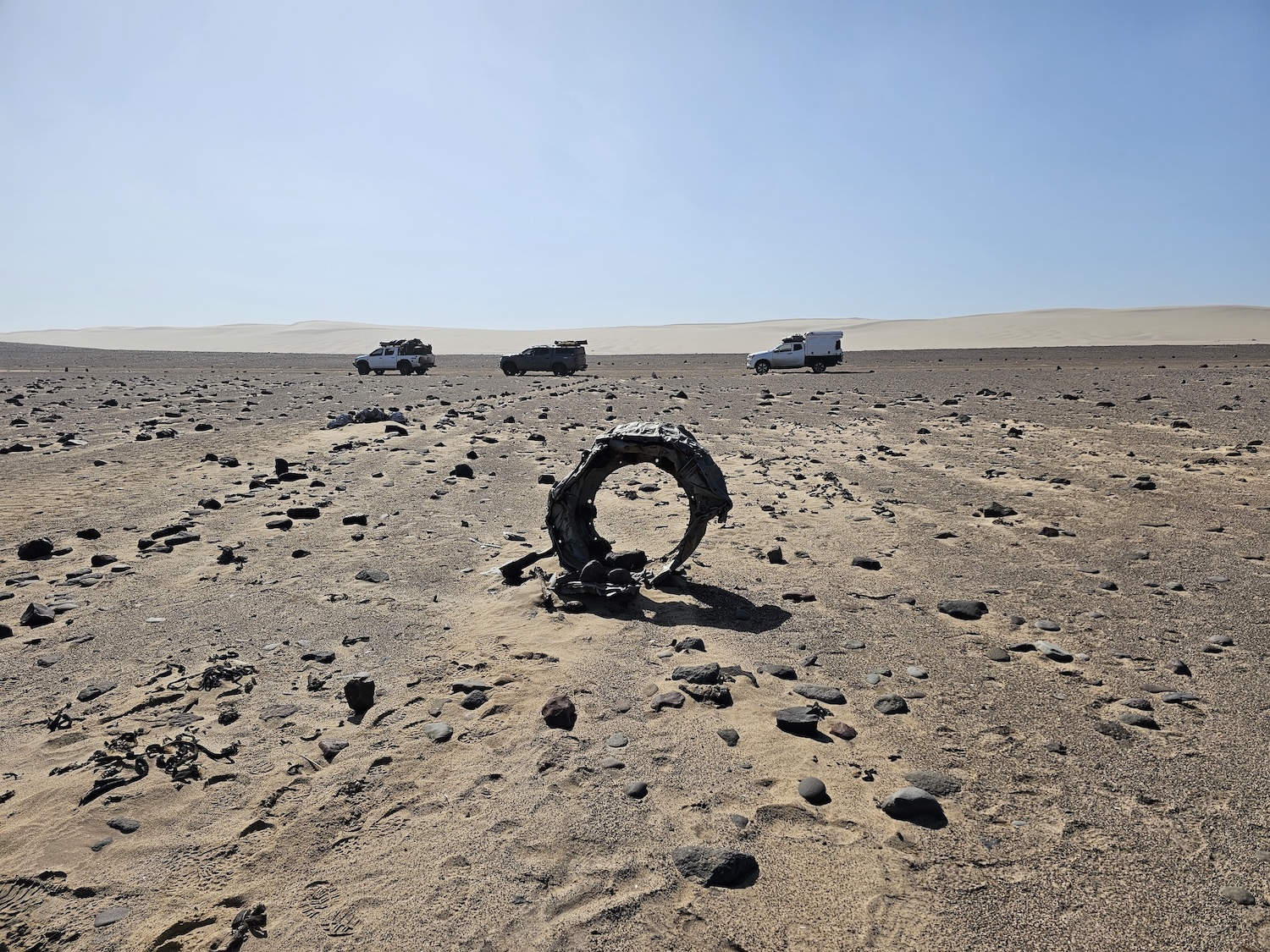
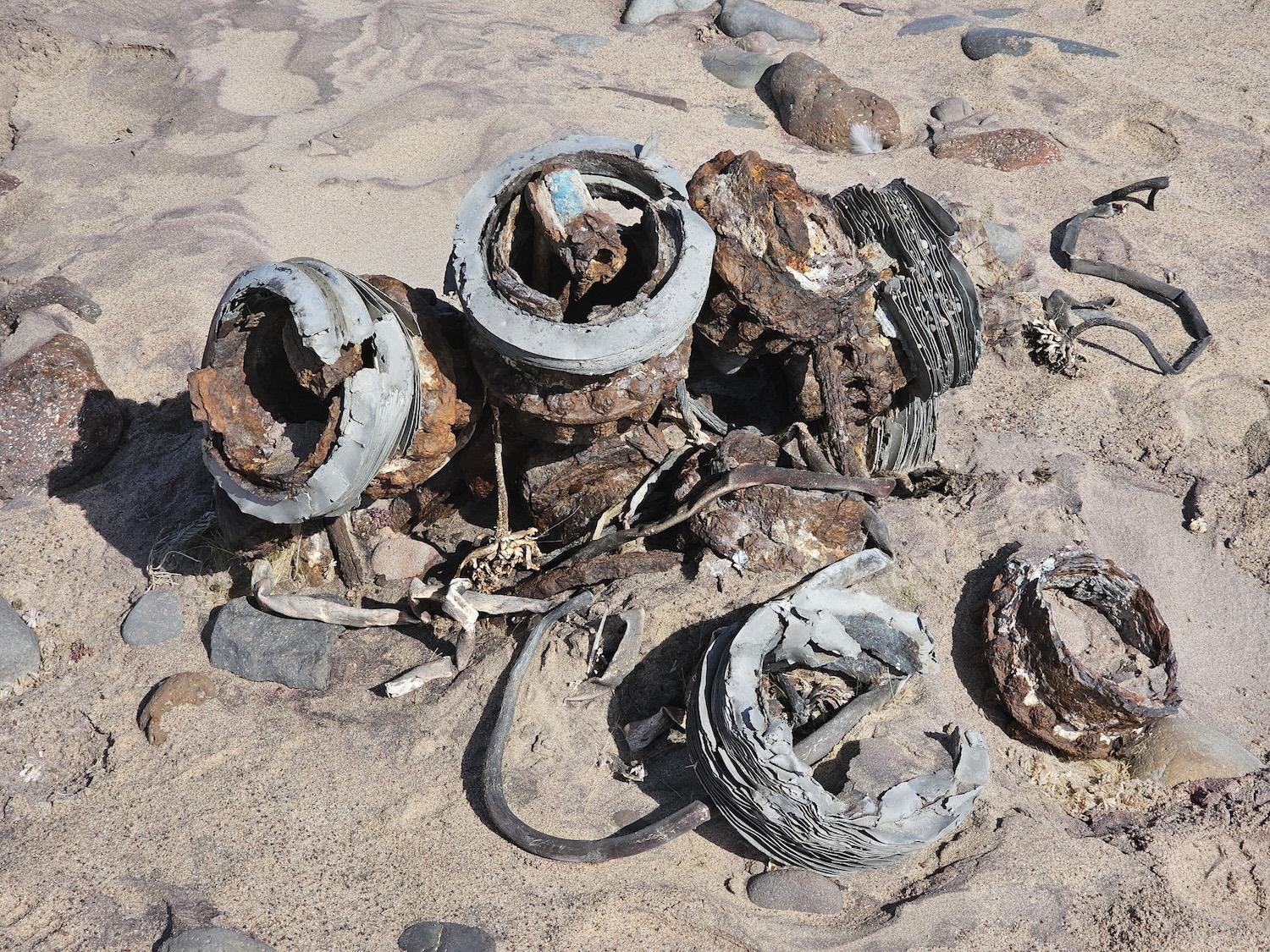
    The Lockheed Ventura was dispatched from the Cape of Good Hope with supplies and water for the survivors. It carried out its’ task, but got stuck in the sand trying to take off again, and some remains are still seen today.

    Then a second bomber was sent. This time they just dropped the supplies, but then it crashed into the ocean! The three survivors swam ashore and had a good old walk in the desert. The whole story can be read at wikipedia if your interest is piqued. Also, more pics in the gallery.

    Now, we turned a little inland. One of the most interesting things about this landscape is the multiple personalities that it can assume. You could be driving on the beach between a dune and the deep blue sea, but turn inland and twenty minutes later you are in an arid area where nothing seems to grow. Another twenty minutes and you are between rocky outcrops where lichens seem to be the only living thing around.

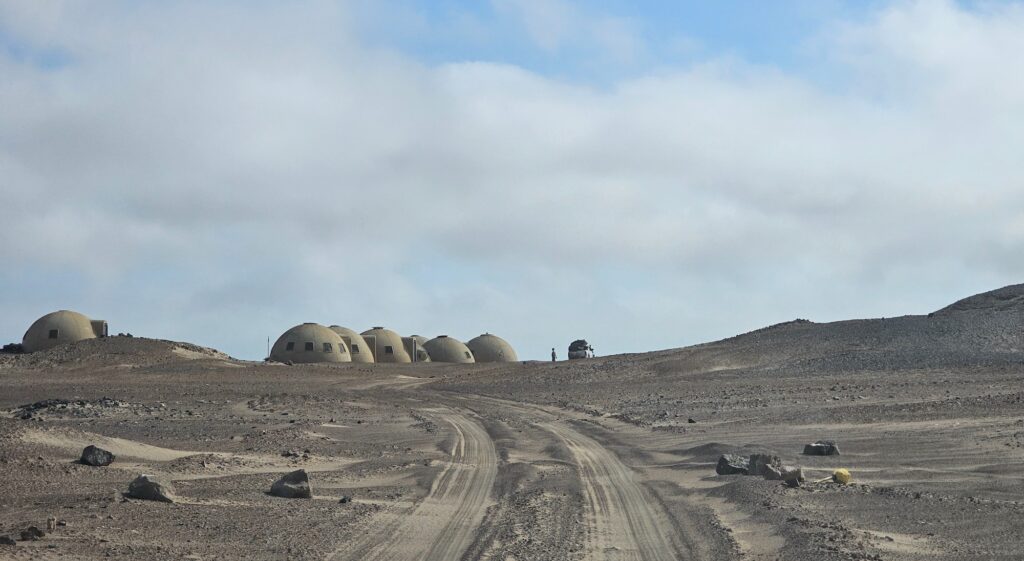
    Before we went on the trip, someone told me parts of the landscape can be compared to the moon. So imagine our surprise as we plodded along, suddenly to be faced with the picture below. It felt like I was on Tattooine in Star Wars, or as if I had stumbled onto a Mars colony.

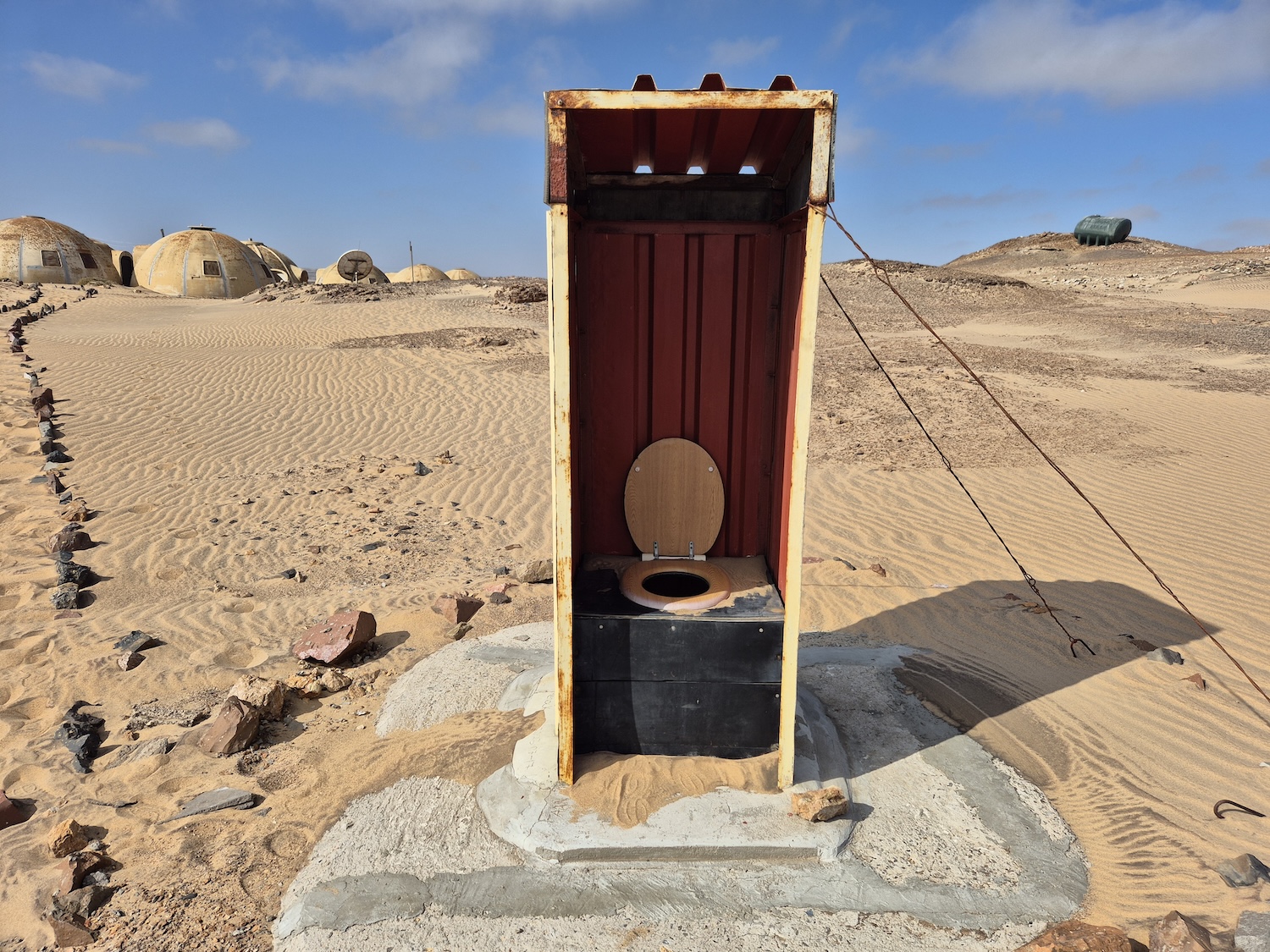
    The picture is actually of an abandoned mine called the Sarusa mine, where semi-precious stones were mined (more pics in gallery). The owner also owns Kristall Galerie in Swakopmund. Sadly, the mine is no longer in use.

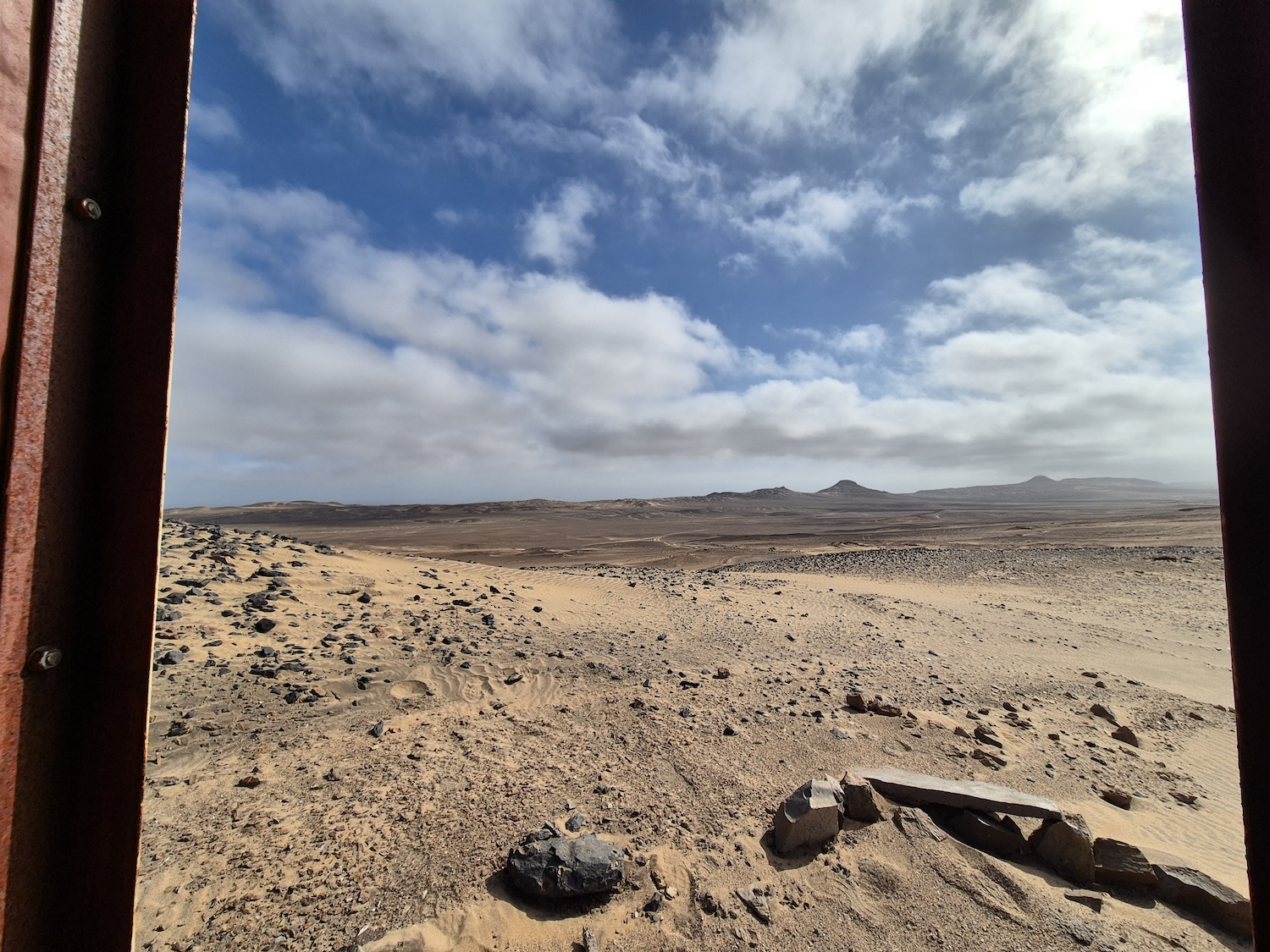
    It now holds this blogs’ trophy for the most scenic toilet! I have a feeling it will have it for some time – the pics below can’t do the view justice.

    Next up, we needed a place to sleep. The mine looked cozy but no doubt there are ghosts looking for treasure at night, so we pushed closer to ocean again. Not too close, because the nights are still windy and a bit misty.

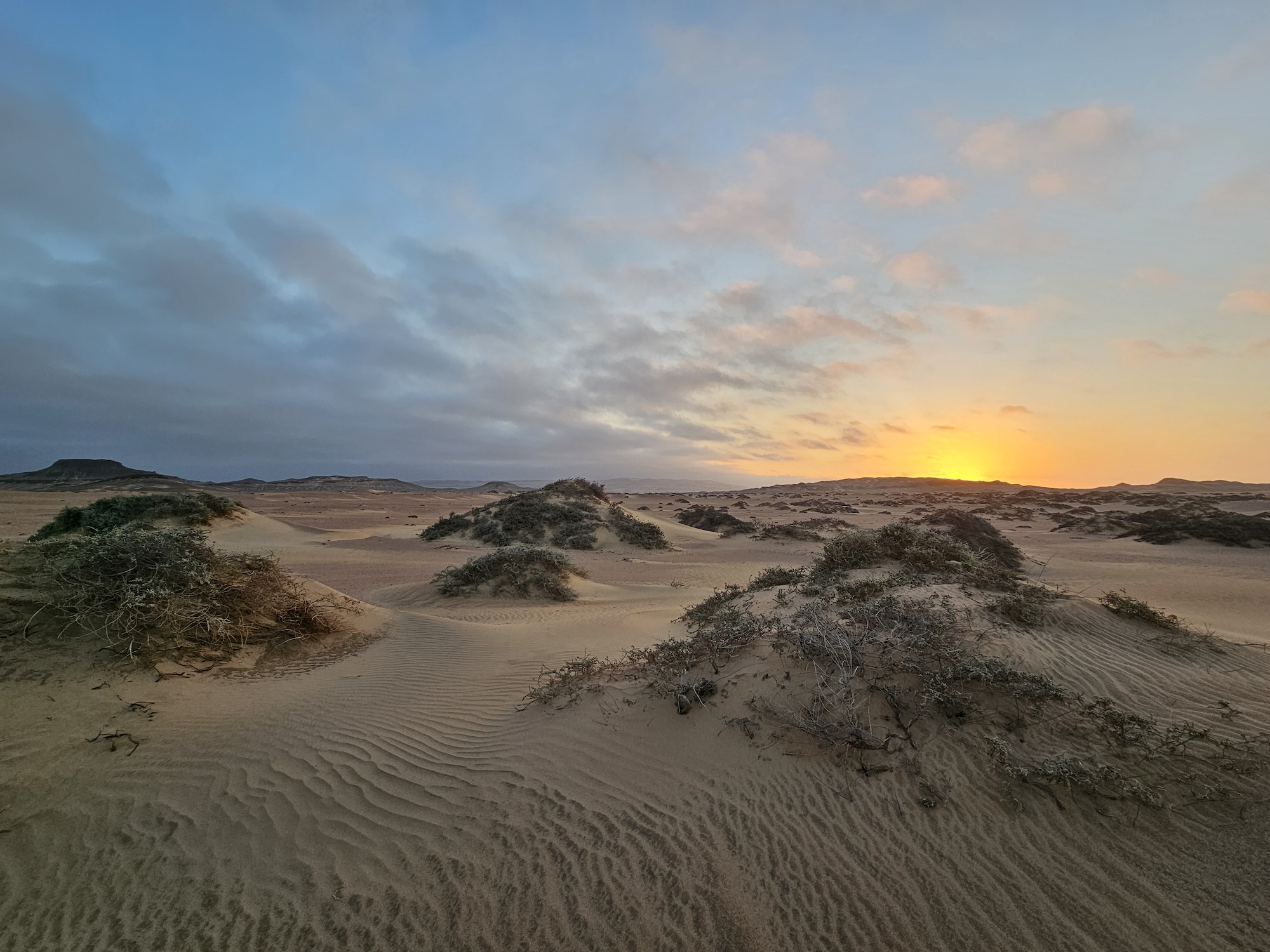
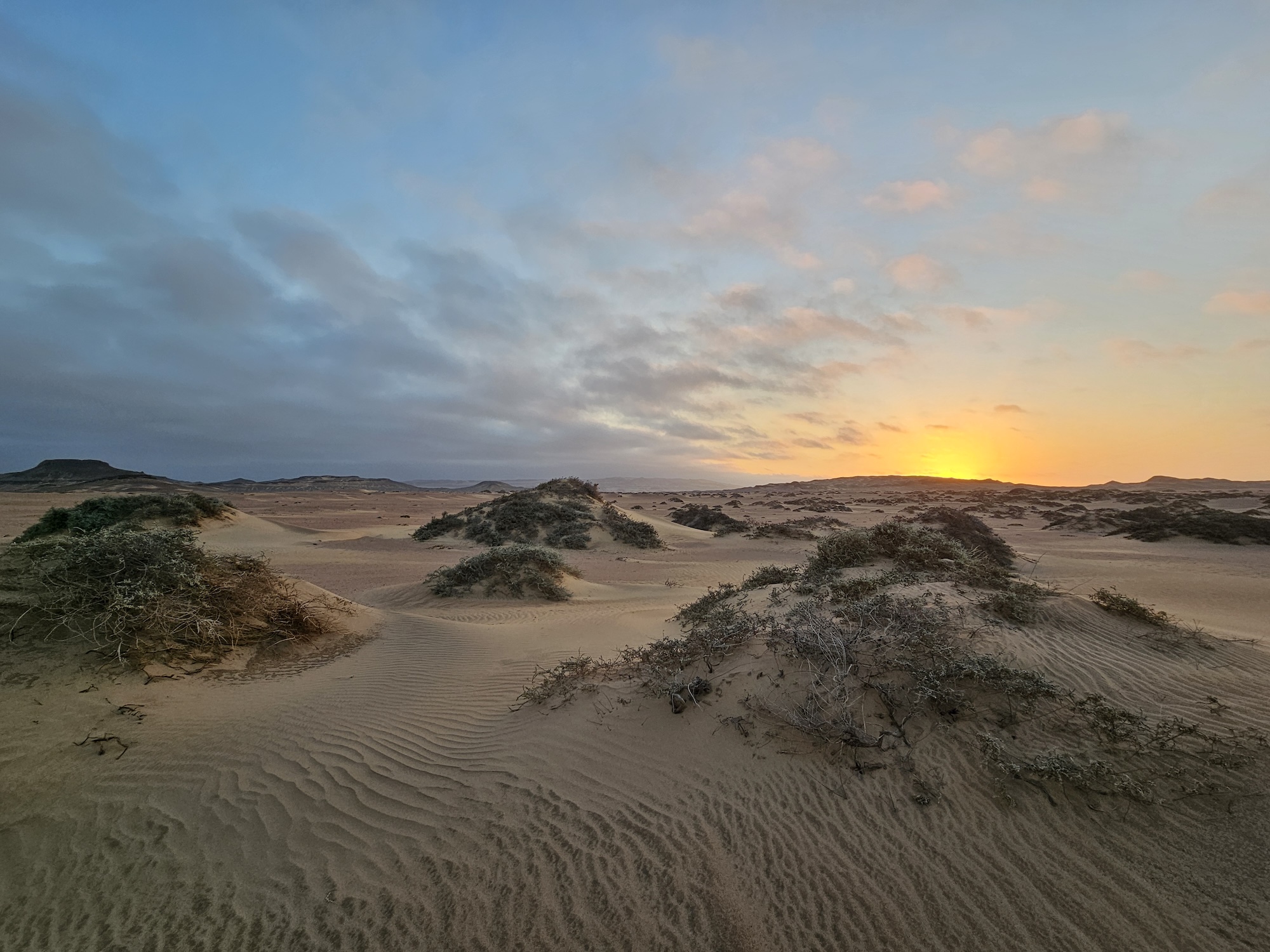
    The chosen spot was well sheltered and looked ordinary enough, but a short walk provided one of the most beautiful sunsets that I would probably ever see.

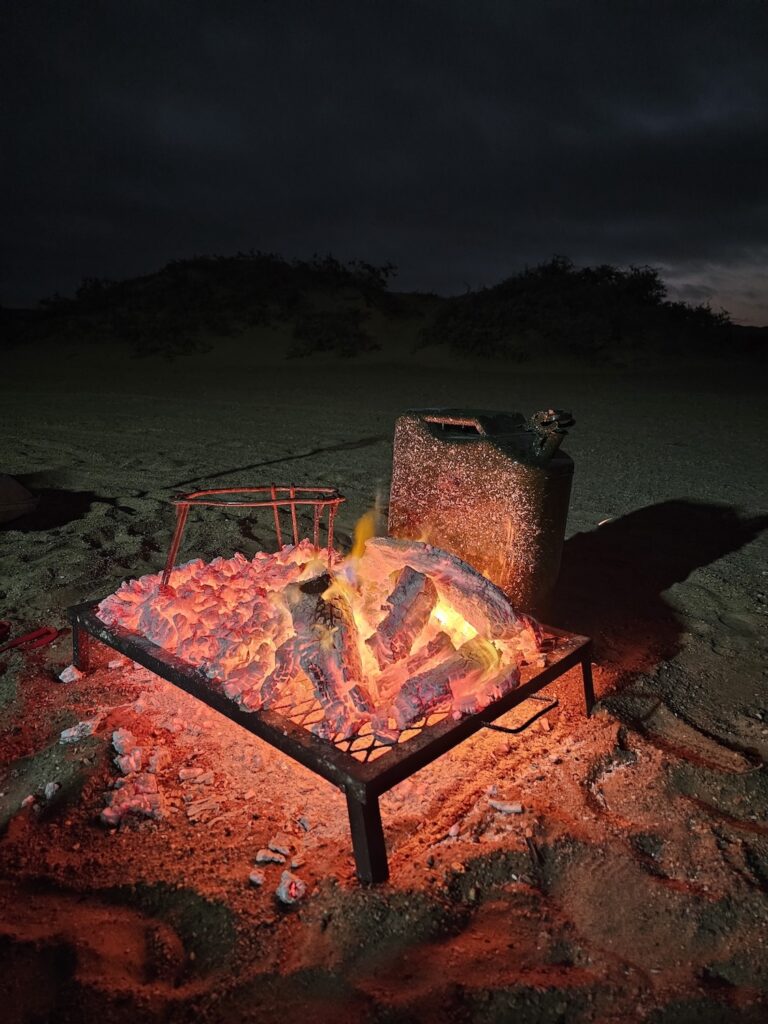
    This evening also provided the setting for my favourite photo of the trip (at least, I think so). No, not the one above, the one below.

    But first, I have to explain how the shower on this trip works. No guys, showers are not compulsory, but it is very nice (or so I’m told).

    It works like this: a shower cubicle is erected for privacy. Inside the cubicle, there is a table and on the table is a basin with hot water, a submersible pump in the water, and a shower spout at the end. So, switch on the pump, and wet your body. Switch off the pump, soap to your hearts’ content, switch on the pump and rinse off the soap. There is not a lot of water to work with, so be quick about it. Or, (in my case) just don’t shower until you get to something proper.

    The way the water for the shower is heated, is quite simply by putting a steel jerry can next to the fire. This image, of the jerry can with ash all over it, spoke to me that night, and it still does.

    It takes me back to the place where I took the photo (I guess that is the general idea of photos, right?) – so that is also a good point to end this post at.

    See you at the next one!

    Skeleton Coast 2025 #1: Introduction

    Skeleton Coast 2025 #2: Getting there

    Skeleton Coast 2025 #3: Swakopmund – old German charm

    Skeleton Coast 2025 #4: Through the mist to somewhere north of Terrace Bay

    Skeleton Coast 2025 #5: Up towards Angra Fria

    Skeleton Coast 2025 #6: Towards and at Bosluisbaai

    Skeleton Coast 2025 #7: Across the dune belt and into Hartmansvallei

    Skeleton Coast 2025 #8: Down to Purros and Sesfontein